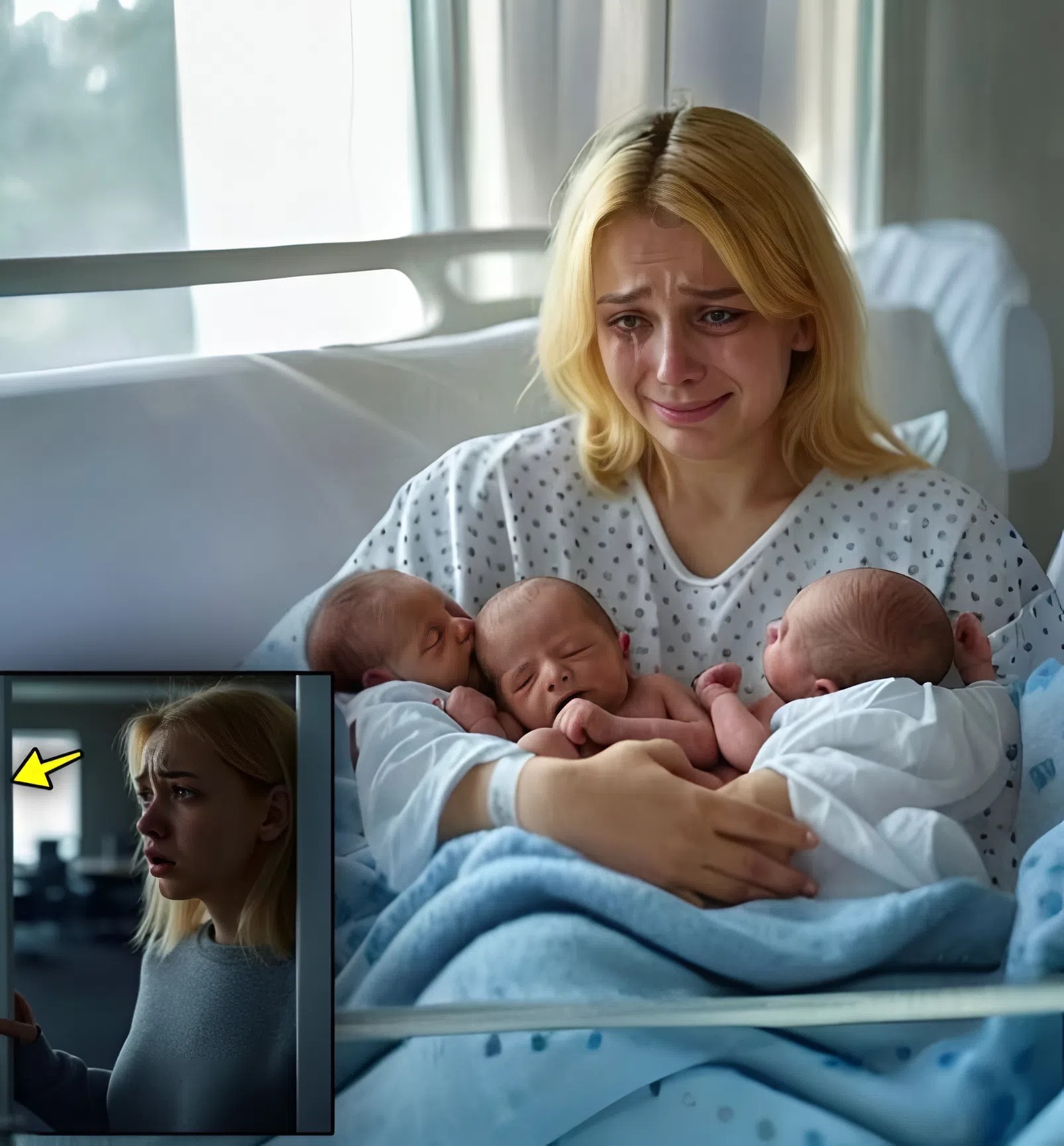
Fifteen years after our triplets were born, my husband suddenly said, “I’ve had doubts for a long time — let’s do a DNA test.” I laughed… until the moment the doctor placed the results on the table and said, “You’d better sit down” 

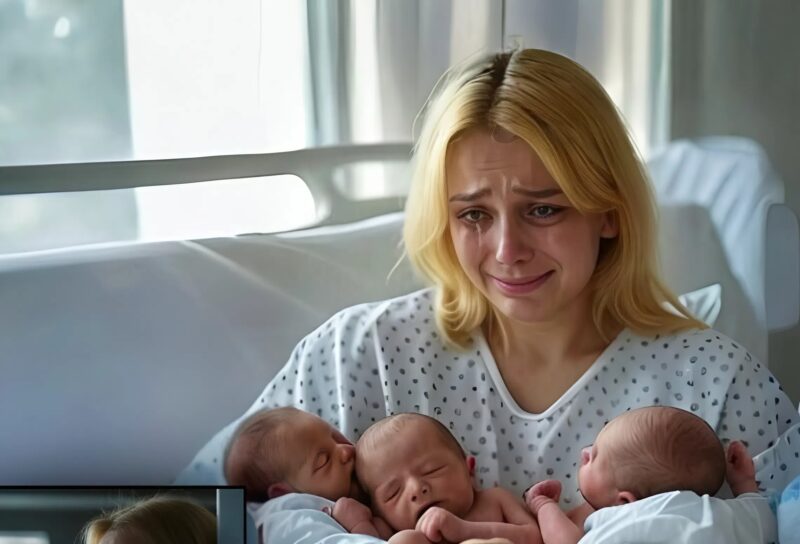
We had lived together for almost twenty years, fifteen of those as parents of triplets. I always believed we had a strong family, despite our challenges. But one evening, after the children had fallen asleep, my husband came up to me with such a strange expression that it looked as if he was about to tell me something terrible.
“I need to talk to you,” he said in a tired voice.
“About what?” I felt a cold shiver run down my spine.
“About the kids…” he sighed, avoiding my eyes. “I’ve noticed for a long time that they don’t look like me at all. And… I’ve always doubted. Always.”
At first I thought he was joking.
“Seriously? We raised them together, you saw everything with your own eyes!”
But my husband continued:
“I need a DNA test. For my own peace of mind. To stop torturing myself. If you’re sure everything is honest — you have nothing to fear.”
I laughed. Not because it was funny, but because it sounded so completely absurd.
“Alright,” I said. “You want a test? Then we’ll do a test.”
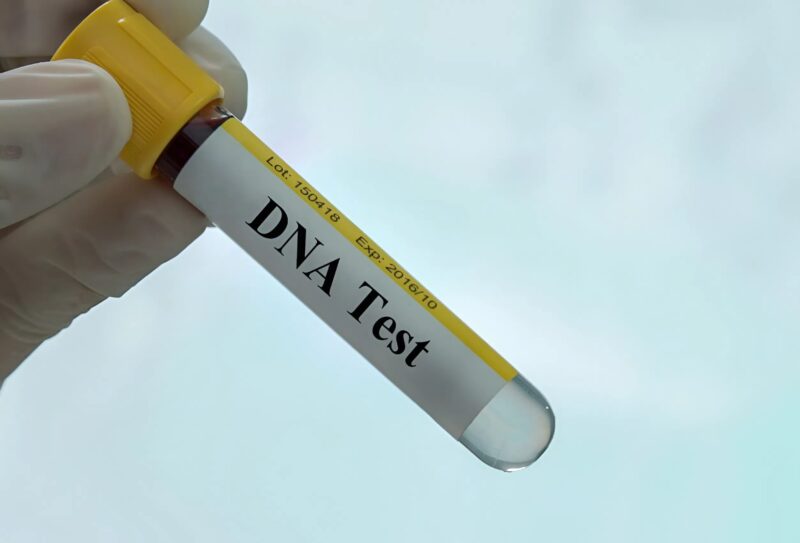
We did the tests as a family. When the results came two weeks later, the doctor walked out holding a folder and suddenly looked at me very seriously.
“You’d better sit down.”
After those words, my family — and my entire life — collapsed Continuation in the first comment 
My head started spinning. For weeks I had rehearsed a version of this moment in my mind: the doctor would look at the paperwork, flip a reassuring smile, and say, “All three are your husband’s children,” and we would leave the hospital and go home, carrying on with the ordinary noise of our life. Instead, the doctor turned the page with a hesitancy that felt like bad weather rolling in, and then he said words that made the ground disappear beneath me.
“None of the three boys is your husband’s biological child.”
The sentence landed between us and fractured the room. My husband turned toward me slowly, as if drawn by some terrible gravity. His usually steady face went paper-white; the knuckles of his hand tightened until his fingers trembled. He whispered something that I couldn’t quite catch at first — a raw, small sound — then, louder, “I knew it… I felt it…” His voice sounded far away, as if coming from a hallway I wasn’t in.
“I don’t understand…” I managed to say. The words came out like borrowed things, fragile and unsure. “This can’t be. It’s impossible.” My vision blurred at the edges; the fluorescent lights in the corridor seemed to swim. I sat down in the hard plastic chair against the wall and focused on breathing because the alternative — passing out — felt shameful and unbearable in a place full of people who could only be polite to strangers in crisis.
My husband looked at me with an expression I had never worn him with before: not anger exactly, not yet, but a kind of stunned distance, as if he had been shown a photograph of a life that belonged to someone else. I stared at the papers the doctor had left open on his lap, trying to make the letters rearrange into something less monstrous. But then the doctor, whose face had been apologetically impassive, lowered his eyes and read aloud the part that would turn our private shock into public scandal.
“We ran a second check,” he said, voice steady and clinical, “and the data indicate this is neither a laboratory mistake nor an accidental mix-up. It appears to have been done intentionally. It concerns the clinic where you underwent IVF fifteen years ago. Dozens of similar cases have been uncovered.”
The words “intentionally” and “dozens” thudded into my chest like falling books. It wasn’t infidelity. It wasn’t a secret affair I had missed in the fog of late nights and bills and ordinary small betrayals. This was a breach of trust on an industrial scale, a deliberate substitution of sperm where it did not belong. The clinic we had believed in, the professionals we had entrusted with the most intimate and fragile part of our lives, were implicated in something monstrous.
My husband covered his face with his hands and made a sound that could have been a laugh or a sob — maybe both. “Fifteen years… fifteen years I thought they were my children…” He sounded like a man trying to hold the pieces of a life that no longer fit together. Around us other conversations continued: muted monitors, the distant clacking of heels. It was obscene, how normal the world remained as ours tilted.
I thought about the boys, asleep at home in their small beds with mismatched sheets and the same stuffed rabbit they’d had since they were toddlers. I thought of Liam’s crooked front tooth, of Noah’s habit of whistling when he did homework, of little Ben insisting on eating cereal with a fork. They had our faces in photographs, our habits, the cadence of our laughter. Could any of that be undone by a sheet of paper? DNA doesn’t measure the way a hand rubs the back at night or the sound of a lullaby hummed off-key. Still, the knowledge that some technician might have deliberately used another man’s sample felt like a violation of the intimacy we had paid for in money and hope.
Questions rushed in, unbidden and relentless. Why would a clinic do this? How many other families were living inside the same theft? Were there financial incentives? Disgruntled workers? Systemic negligence? The doctor offered what little he could—an apology, a promise of cooperation with authorities, the assurance that the hospital would help us connect with investigators and legal counsel—but the practicalities mattered less in that moment than the existential rupture. Our life had cleaved into “before” and “after,” and there was no neat way to stitch the two back together.
We left the hospital in a kind of fog, clutching a sheaf of photocopied reports and a list of hotlines. At home the boys greeted us with their usual energetic flurry, oblivious to the seismic shift that had just occurred. I watched my husband study them with the meticulousness of a man who was trying to memorize every small fact in case he needed to cling to them later. He lifted Noah onto his shoulders and laughed in a voice that was half-nervous adrenaline, half grief.
In the days that followed, we received calls from investigators, lawyers, and journalists. We sat through interviews and signed forms. Neighbors expressed pity and curiosity in equal measure. Friends asked how we were holding up; some offered practical help, others gave space. Through it all the boys remained, in every ordinary way, ours. They continued to scrape their knees, to ask for peanut butter at midnight, to fall asleep curled around one another. It was both a relief and a fresh kind of torment.
We had decisions to make, enormous and intimate ones. Do we tell the boys the truth now, or protect them for as long as we can? Do we pursue legal action against the clinic and try to find the biological father, or do we focus on the life we’ve already built? Could we forgive or even understand the reasons behind such cruelty? My husband and I sat at our kitchen table for hours, speaking in low voices, sometimes not speaking at all. We weighed the practicalities—medical records, legal fees, DNA registries—and the moral ones: trust, parenthood, the meaning of family.
The world had handed us a new, unbearable piece of information, and now the real work began: to decide whether this truth would fracture us beyond repair, or whether we could, together, redefine what it meant to be a family. Either way, there was no returning to the person I had been fifteen years ago, before the phone call, before the papers, before the word “intentionally” made the air concrete and cold.